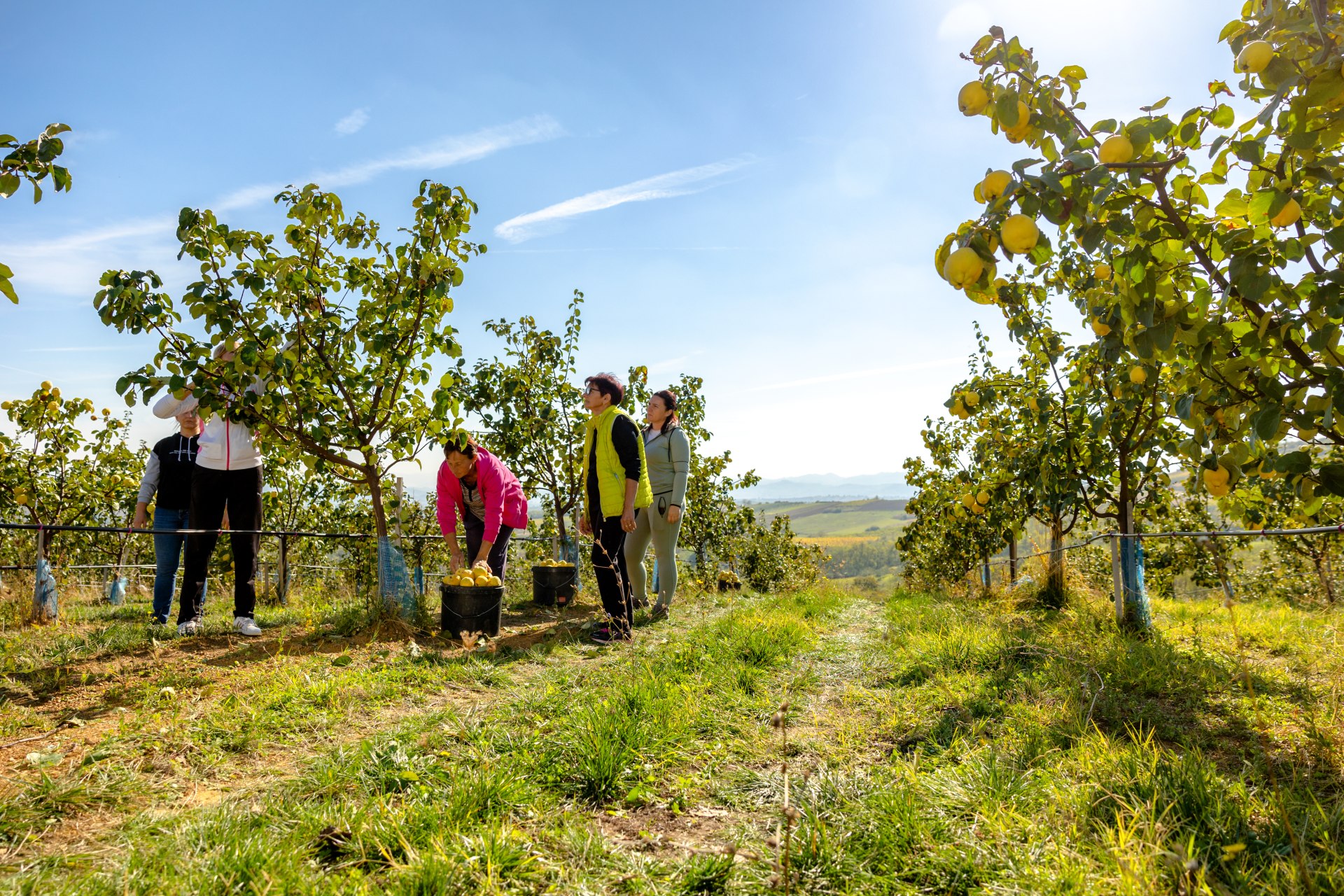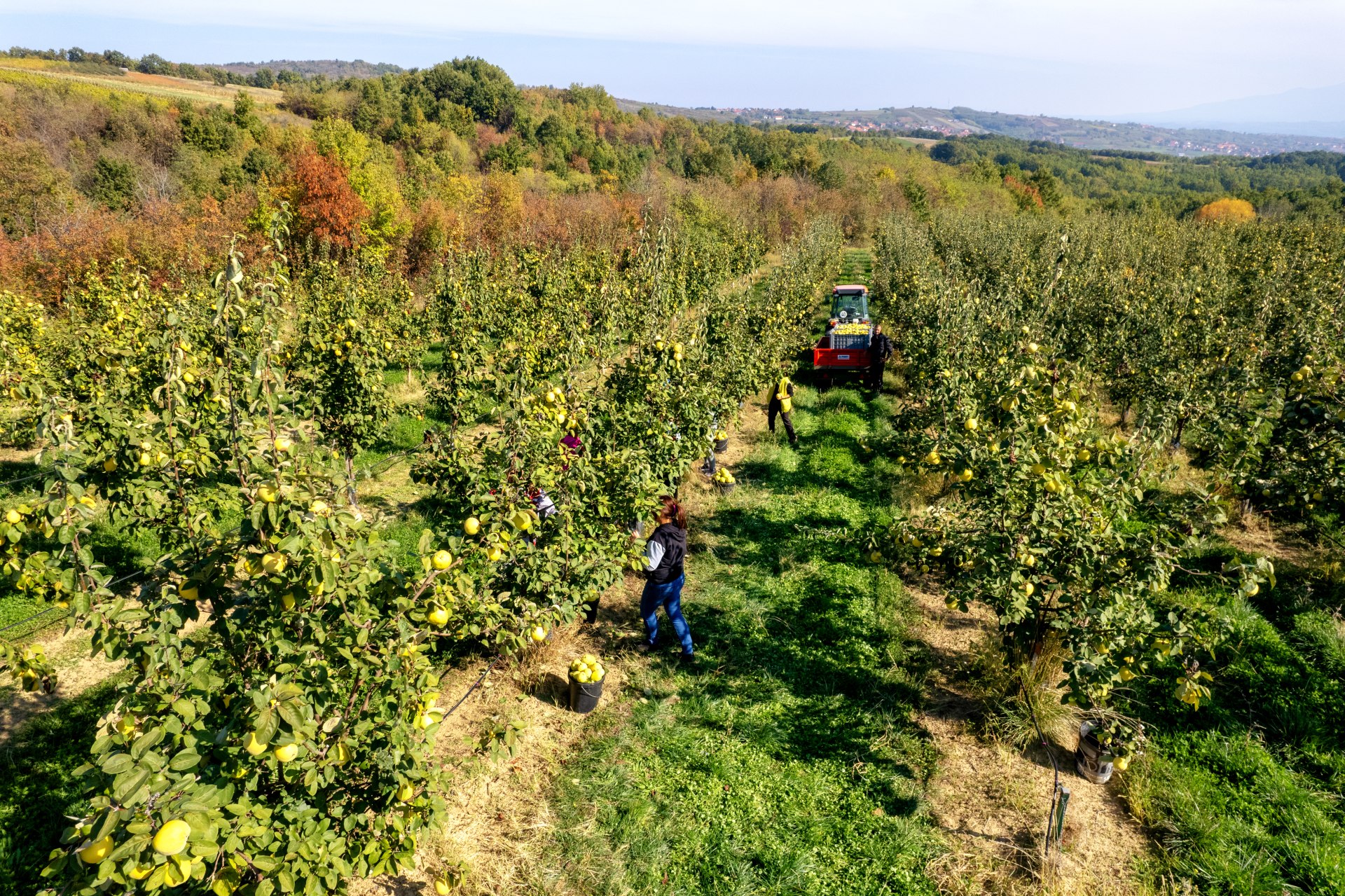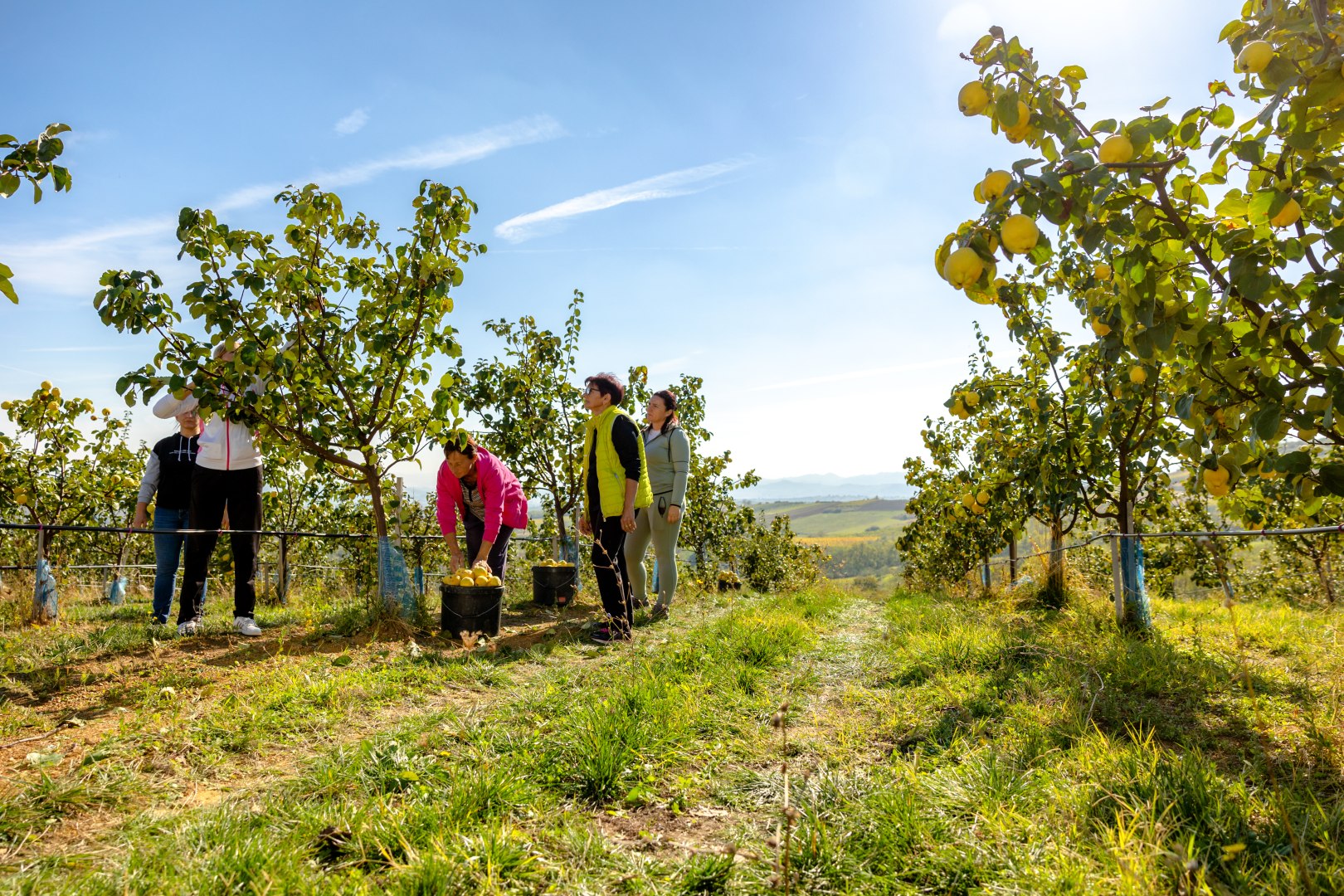
At the MIKO Estate, which spans almost 40 hectares in the Aleksandrovac Župa region, this is the fifth quince harvest since the orchard was planted back in 2019. Following the first symbolic quantities harvested in 2021, the official first harvest took place in 2022. The Balkans' largest quince orchard, with a total of 21,136 quince trees — of which the Leskovac variety accounts for 46% of the plantings — continues to grow toward its full capacity, which is still ahead of us.
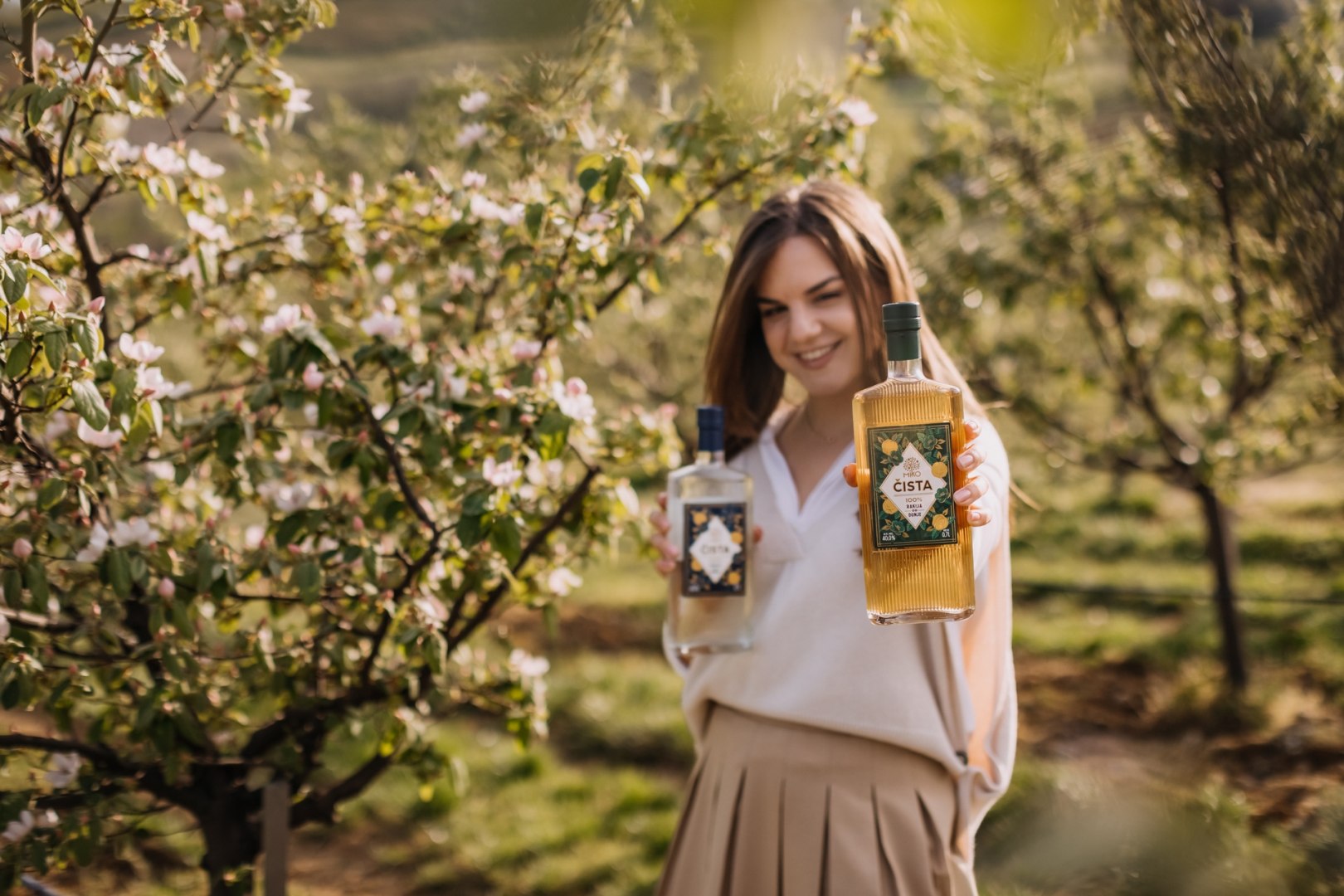
Every harvest represents the first and most important step in creating quince brandy, which in the coming months will make its way into stainless-steel tanks, barrels and, finally, bottles.
The Distillery at the Heart of the Estate
What sets MIKO apart from most brandy producers is the fact that our distillery is located at the very heart of the estate, right next to the orchard. As a result, everything harvested today is processed on the very same day. The pace of harvesting is fully aligned with the pace of processing, without long-distance transport or storage.
Because we determine the pace of harvesting ourselves, only technologically ripe fruit goes for processing — which means there is no need for additional fruit maturation before distillation. This also eliminates the risk of potential spoilage, a common problem for producers who depend on purchasing and transporting fruit from external sources.
The Advantage of Our Own Quince Orchard
Our own quince orchard gives us two key advantages in brandy production:
Control. We decide which varieties we grow and cultivate, as well as how they are subsequently used in production — meaning far less uncertainty regarding fruit quality. This gives us stability in our supply, production and inventory because we do not depend on external suppliers.
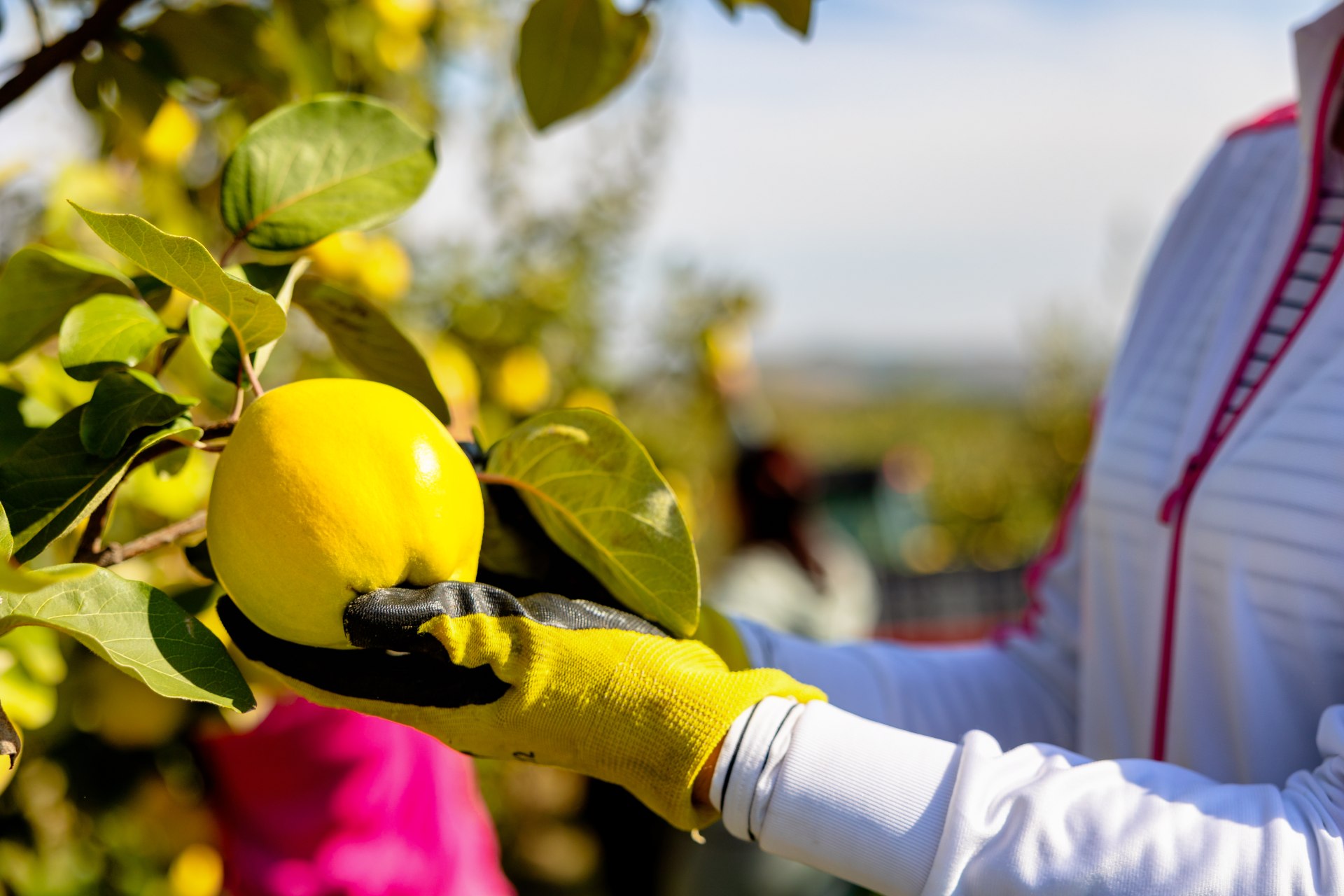
Harvest timing. We harvest the fruit by hand, allowing for additional selection and ensuring a high-quality raw material. Our own quince orchard allows the fruit to remain on the tree and absorb the sun's rays until it reaches ideal ripeness — which is why we usually finish harvesting only in November, and sometimes in December. This directly affects the fruit's sugar content and aroma, allowing us to produce brandy without added sugar, artificial aromas or other flavor enhancers.
With 33 hectares planted with quince, a drip irrigation system and spring water brought in from one of the largest springs in Župa, the estate has been specifically designed to provide the fruit with optimal growing conditions — without unnecessary use of resources.
What Happens After the Harvest
The harvested fruit undergoes a careful processing and distillation process on the very same day, following traditional recipes and the most modern production conditions. Most of this year's yield will form the basis for the next batch of MIKO quince brandy, which will soon make its way to the market.
Quince harvesting at the MIKO Estate is therefore not merely an agricultural event — it is the beginning of the story behind every bottle that travels from the distillery to the consumer.
Learn more about the fruit that defines us and about production at the MIKO Estate.